
You have no items in your shopping cart.
Description
Research Area
Metabolism Research
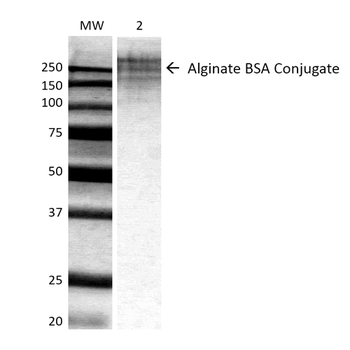
Images & Validation
−
Item 1 of 1
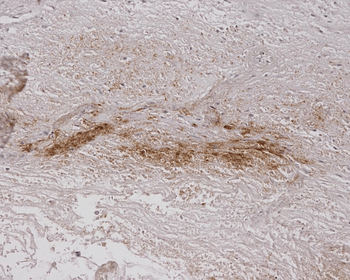
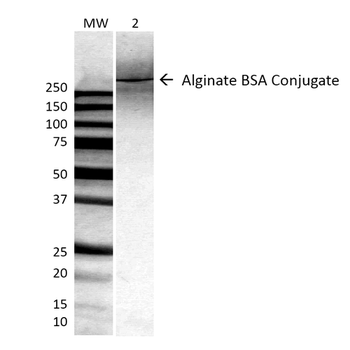
| Tested Applications | IHC, WB |
|---|---|
| Dilution Range | WB (1:500) |
| Reactivity | All |
| Application Notes |
Key Properties
−| Host | Mouse |
|---|---|
| Clonality | Monoclonal |
| Isotype | IgG1 Kappa |
| Clone No. | 3G4-1F5 |
| Immunogen | Sodium Alginate conjugated to KLH |
| Target | Alginate |
| Purification | Protein G Purified |
| Conjugation | RPE |
Storage & Handling
−| Storage | Conjugated antibodies should be stored according to the product label |
|---|---|
| Buffer/Preservatives | 95.46mM Phosphate, 2.48mM MES and 2mM EDTA |
| Concentration | 1 mg/ml |
| Expiration Date | 12 months from date of receipt. |
| Disclaimer | For research use only |
Alternative Names
−Alginate, a naturally derived polysaccharide from brown seaweed, is widely used in biomedical research due to its excellent biocompatibility, low immunogenicity, and ability to form hydrogels through ionic crosslinking with divalent cations such as calcium (Ca²⁺). In neuroscience and neurodegenerative disease research, alginate-based systems are gaining traction as advanced platforms for cell encapsulation, controlled drug delivery, and 3D neural tissue modeling. One of alginate’s most impactful applications is in the formation of microspheres and scaffolds that enable sustained, localized delivery of neuroprotective proteins and therapeutic agents. This controlled release capability is critical for maintaining therapeutic concentrations in the brain microenvironment, particularly in diseases such as Alzheimer’s, Parkinson’s, and amyotrophic lateral sclerosis (ALS), where targeted intervention is essential. Moreover, alginate hydrogels support the encapsulation and transplantation of neural stem cells and glial cells, preserving cell viability and function while minimizing immune rejection. These properties make alginate an ideal candidate for developing bioengineered neural tissues, in vitro brain models, and regenerative therapies aimed at restoring damaged neural circuits. As research advances, alginate continues to emerge as a key biomaterial in the design of next-generation neurotherapeutic strategies, offering promising avenues for both fundamental neuroscience and translational applications in neurodegenerative disease treatment.
Similar Products
−- Item 1 of 2

Quality Guarantee
Explore bioreagents carefree to elevate your research. All our products are rigorously tested for performance. If a product does not perform as described on its datasheet, our scientific support team will provide expert troubleshooting, a prompt replacement, or a refund. For full details, please see our Terms & Conditions and Buying Guide. Contact us at [email protected].
Quick Database Links
Gene Symbol
Alginate
Protocol Information
WB
Western Blot (IB, immunoblot)
IHC
Immunohistochemistry
Available Sizes
Select a size below
Choose Conjugation or Carrier Free Version
Free Secondary Antibody (20 ul)0/0
Please add an antibody product to your cart first.
 Usually dispatched within 2-3 weeks