
You have no items in your shopping cart.
Description
Research Area
Apoptotic, Cancer, Epigenetics, Neuroscience, Signaling Pathways
Images & Validation
−
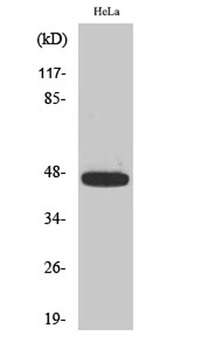
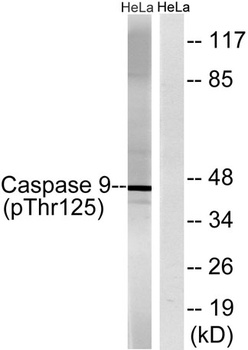
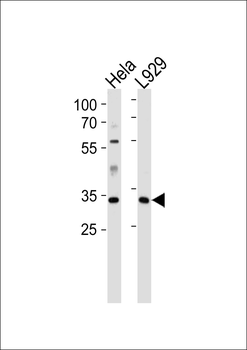
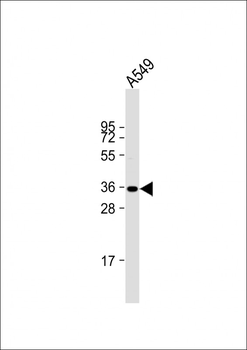
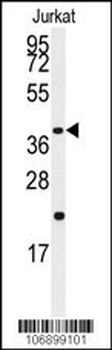
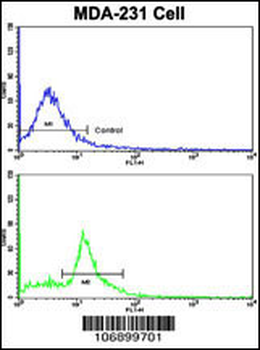
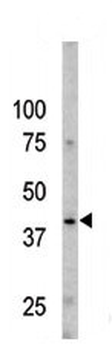
| Tested Applications | WB |
|---|---|
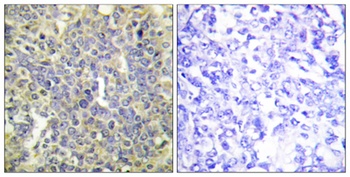
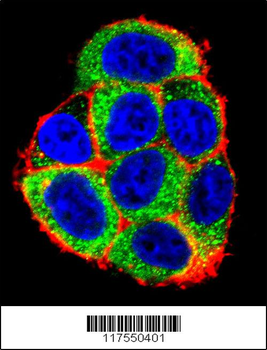
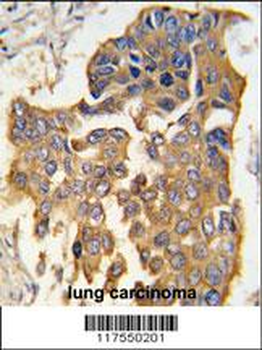
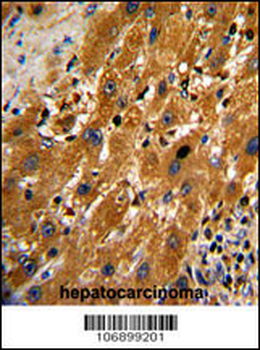
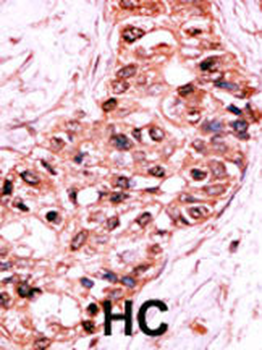
| Dilution Range | WB: 1:500-1:2000, IHC-P: 1:50-1:100 |
| Reactivity | Human, Mouse, Rat |
Key Properties
−| Clonality | Polyclonal |
|---|---|
| Isotype | IgG |
| Immunogen | A synthetic peptide of human Caspase-9(NP_001220.2). |
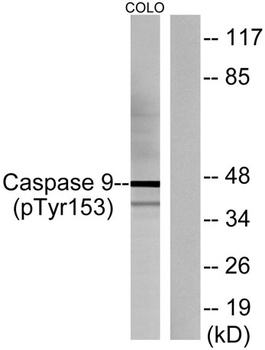
| Molecular Weight | 47KDa/35KDa/37KDa |
| Purification | Affinity purification |
| Conjugation | Unconjugated |
Storage & Handling
−| Storage | Maintain refrigerated at 2-8°C for up to 2 weeks. For long term storage store at -20°C in small aliquots to prevent freeze-thaw cycles. |
|---|---|
| Buffer/Preservatives | PBS with 0.05% proclin300,50% glycerol,pH7.3. |
| Expiration Date | 12 months from date of receipt. |
| Disclaimer | For research use only |
Alternative Names
−CASP9, APAF-3, APAF3, ICE-LAP6, MCH6, PPP1R56, caspase-9, casp9, Caspase 9
Similar Products
−- Item 1 of 4
Caspase-9 (phospho Thr125) rabbit pAb Antibody [orb764344]
ELISA, IF, IHC, WB
Human, Mouse, Rat
Polyclonal
Unconjugated
50 μl, 100 μl - Item 1 of 4
CASP9 Antibody (Center) [orb1928716]
IF, IHC-P, WB
Human, Mouse
Rabbit
Polyclonal
Unconjugated
50 μl, 100 μl - Item 1 of 3
Caspase-9 (phospho Tyr153) rabbit pAb Antibody [orb770616]
ELISA, IF, WB
Human, Mouse, Rat
Polyclonal
Unconjugated
50 μl, 100 μl - Item 1 of 3
- Item 1 of 2
Phospho-Caspase 9(S196) Antibody [orb1931291]
IHC-P, WB
Human
Rabbit
Polyclonal
Unconjugated
100 μl, 50 μl

Quality Guarantee
Explore bioreagents carefree to elevate your research. All our products are rigorously tested for performance. If a product does not perform as described on its datasheet, our scientific support team will provide expert troubleshooting, a prompt replacement, or a refund. For full details, please see our Terms & Conditions and Buying Guide. Contact us at [email protected].
Quick Database Links
UniProt
UniProt Details
− No UniProt data available
Chen, Weixia et al. Interference of KLF9 relieved the development of gestational diabetes mellitus by upregulating DDAH2 Bioengineered, 13, 395-406 (2022)