
You have no items in your shopping cart.
Description
Research Area
Immunology & Inflammation
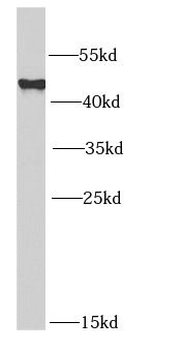
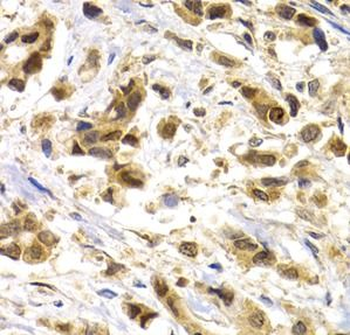
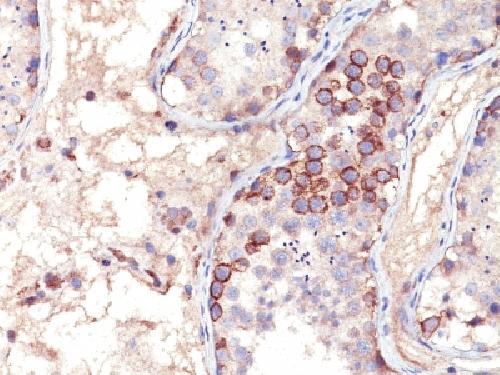
Images & Validation
−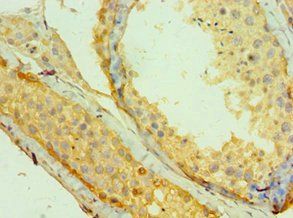
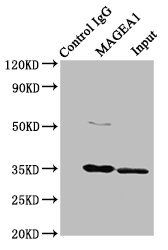
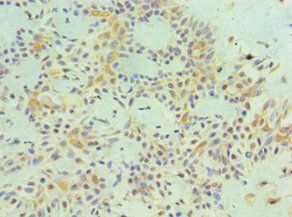
Item 1 of 3
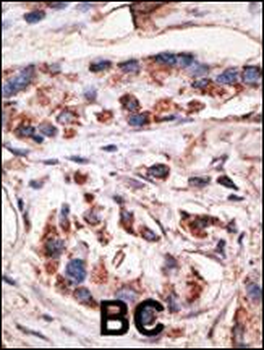
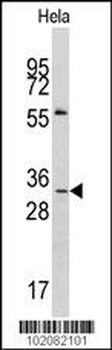
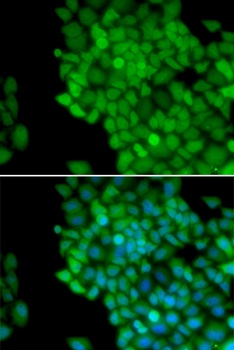
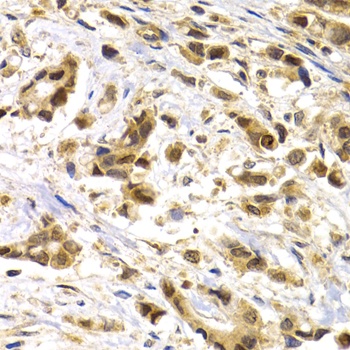
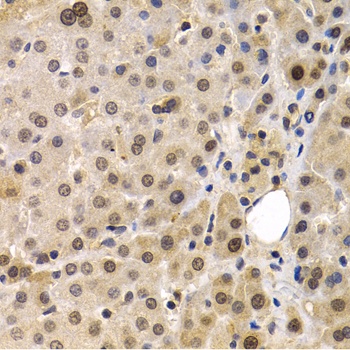
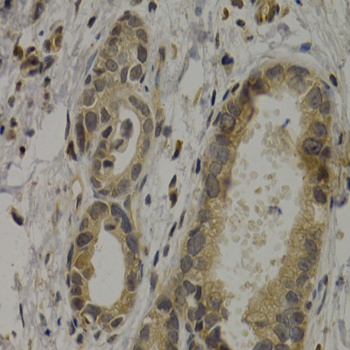
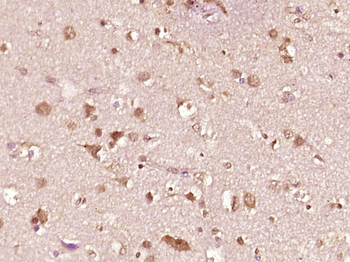
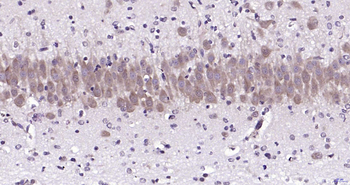
| Tested Applications | ELISA, IHC, IP |
|---|---|
| Dilution Range | IHC-P:1:20-1:200 |
| Reactivity | Human |
Key Properties
−| Host | Rabbit |
|---|---|
| Clonality | Polyclonal |
| Isotype | IgG |
| Immunogen | Recombinant Human Melanoma-associated antigen 1 protein (1-309AA) |
| Target | MAGEA1 |
| Purification | Antigen Affinity Purified |
| Conjugation | Unconjugated |
Storage & Handling
−| Storage | Maintain refrigerated at 2-8°C for up to 2 weeks. For long term storage store at -20°C in small aliquots to prevent freeze-thaw cycles. |
|---|---|
| Form/Appearance | Liquid |
| Buffer/Preservatives | PBS with 0.02% sodium azide, 50% glycerol, pH7.3. |
| Expiration Date | 12 months from date of receipt. |
| Disclaimer | For research use only |
Alternative Names
−anti-Antigen MZ2-E antibody, anti-Cancer/testis antigen 1.1 antibody, anti-CT1.1 antibody, anti-MAGE-1 antigen antibody, anti-MAGEA1 antibody, anti-MAGE1 antibody, anti-MAGE1A antibody
Similar Products
−- Item 1 of 3
- Item 1 of 4
- Item 1 of 2
MAGE-1 Rabbit Polyclonal Antibody [orb11016]
IF, IHC-Fr, IHC-P
Rat
Human, Rat
Rabbit
Polyclonal
Unconjugated
50 μl, 100 μl, 200 μl - Item 1 of 2
MAGEA1 Rabbit Polyclonal Antibody [orb628579]
ELISA, IF, IHC, WB
Human, Mouse
Rabbit
Polyclonal
Unconjugated
50 μg, 100 μg - Item 1 of 1
MAGEA1 Antibody [orb388416]
IHC
Canine, Human, Rat
Mouse
Monoclonal
Unconjugated
20 μg, 100 μg, 100 μg (without BSA and Azide)

Quality Guarantee
Explore bioreagents carefree to elevate your research. All our products are rigorously tested for performance. If a product does not perform as described on its datasheet, our scientific support team will provide expert troubleshooting, a prompt replacement, or a refund. For full details, please see our Terms & Conditions and Buying Guide. Contact us at [email protected].
Quick Database Links
Gene Symbol
MAGEA1
UniProt
UniProt Details
− No UniProt data available
Protocol Information
IHC
Immunohistochemistry
ELISA
Enzyme-linked Immunosorbent Assay (EIA)
IP
Immunoprecipitation
Available Sizes
Select a size below
Choose Conjugation or Carrier Free Version
Free Secondary Antibody (20 ul)0/0
Please add an antibody product to your cart first.
 Usually dispatched within 5-10 working days