Cart summary

You have no items in your shopping cart.

Retinoic acid

SKU: orb1309934

Description

Tretinoin, a vitamin A metabolite, is a potent natural agonist of retinoic acid receptors (RARα/β/γ) with an IC50 of 14 nM. It is widely used in research to study cellular differentiation, proliferation, and tumorigenesis in both in vitro and in vivo models of oncology and dermatology.

Research Area

Cell Biology, Metabolism Research, Molecular Biology

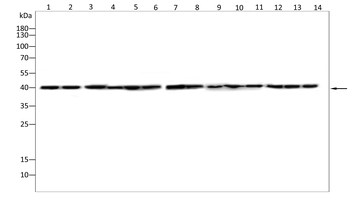
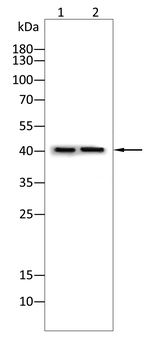
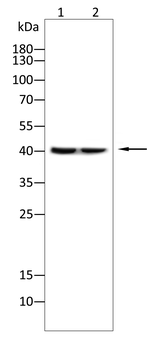
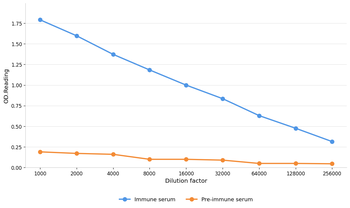
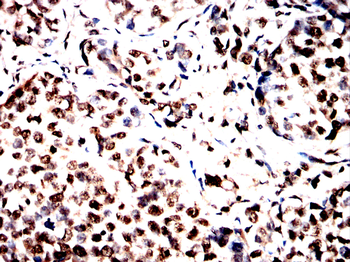
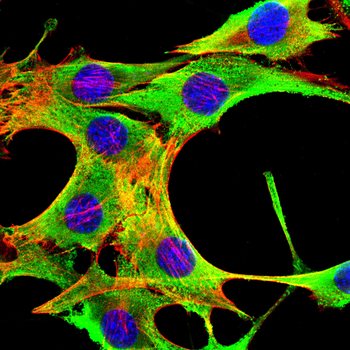
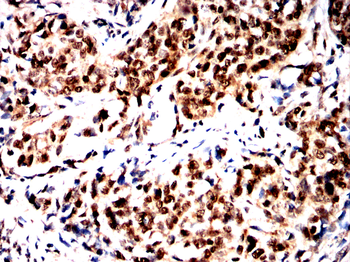
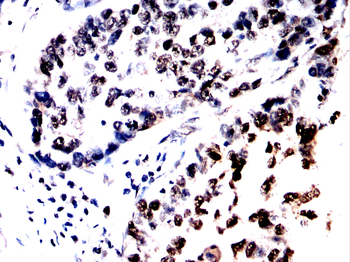
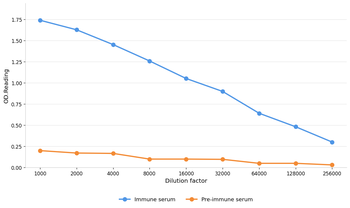
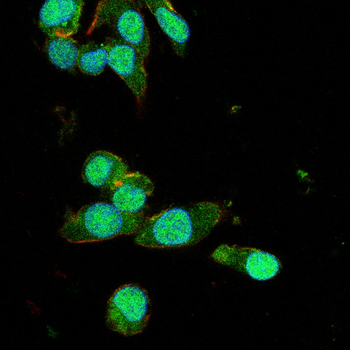
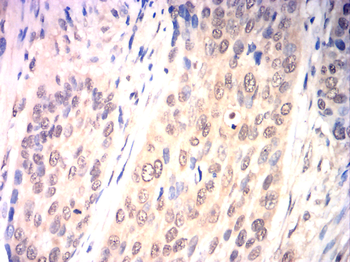
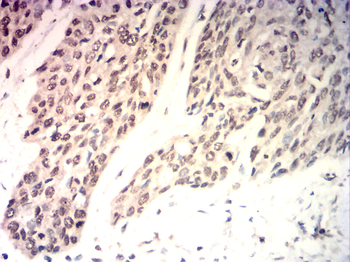
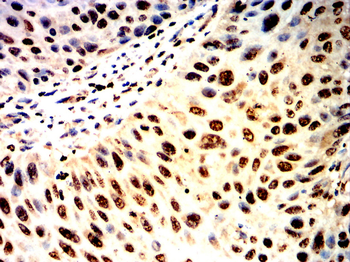
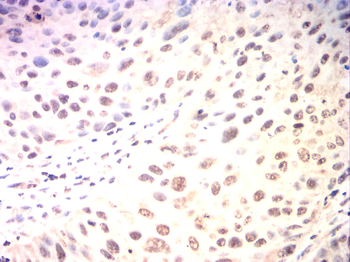
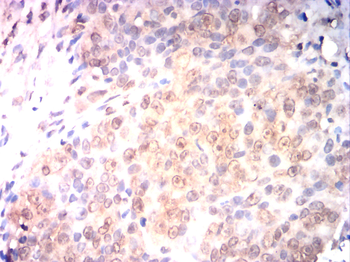
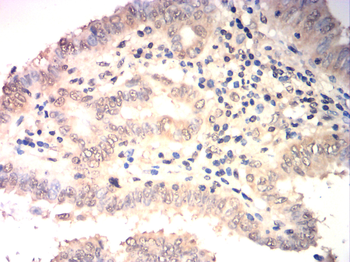
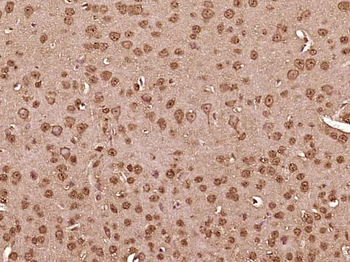
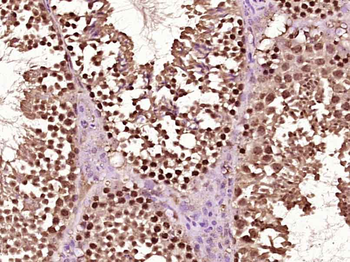
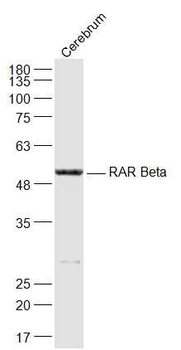
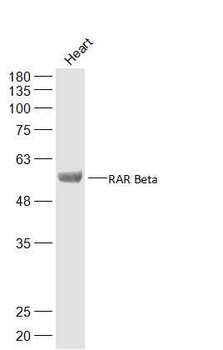
Images & Validation

Key Properties

CAS Number302-79-4
MW300.44
Purity99.60%
FormulaC20H28O2
SMILESCC(/C=C/C1=C(C)CCCC1(C)C)=C\C=C\C(C)=C\C(O)=O
TargetPPAR,Endogenous Metabolite,Autophagy,Retinoid Receptor
SolubilityEthanol:6 mg/mL (19.97 mM);10% DMSO+40% PEG300+5% Tween 80+45% Saline:5.6 mg/mL (18.64 mM);DMSO:95 mg/mL (316.2 mM);H2O:< 1 mg/mL (insoluble or slightly soluble)

Bioactivity

Target IC50
RARβ:14 nM|RARγ:14 nM|PPARβ/δ:17 nM (Kd)|PPARα:103 nM (Kd)|PPARγ:178 nM (Kd)|RARα:14 nM
In Vivo
In studies evaluatin the impact on glutathione levels and catalase activity, Tretinoin increased both metrics in a time- and dose-dependent manner, offering Protective and mitigating effects against H2O2 cytotoxicity in human renal mesangial cells. Treatment with Tretinoin resulted in elevated mRNA levels of catalase and γ-glutamylcysteine synthetase (the catalytic subunit responsible fo the rate-limiting step in reduced glutathione synthesis) in cultured mesangial cells. Additionally, Tretinoin upregulated matrix metalloproteinase-8/13 in human keloid-derived fibroblasts.
In Vitro
Tretinoin prevents skin atrophy induced by corticosteroids in hairless mice. When co-administered with miquimod in guinea pigs, tretinoin induces tattoo fading and moderate pigment clearance histopathologically. Applications of tretinoin on incisions in the skin of 45 CD-1 mice increase fibroblast differentiation and reduce collagen production. In aged Male Fischer 344 rats treated with tretinoin, renal cortex protein content is 30% lower compared to controls, potentially due to suppressed expression of tumor necrosis factor-β1 and osteopontin.
Cell Research
Retinoic acid is dissolved in DMSO and stored, and then diluted with appropriate medium before us. P19 cell are induced to undergo neuronal differentiation according to established procedures. Briefly, cells are cultured on 1% agarose-coated 10 cm dishes at × 0 5 cells mL in α-minimal essential medium supplemented with 10% FBS. Differentiation is induced by addition of Retinoic acid (1 μM) and medium containing Retinoic acid replaced 2 days later. On day 4, cell aggregates are collected by centrifugation, separated to Single cells by trypsin/EDTA treatment, replated onto poly-L-lysine-coated plates, and cultured in α-minimal essential medium supplemented with 10% FBS. On day 6, medium is replaced with neurobasal medium containing B27 supplement and 2 mM GlutaMAX. Medium is replaced every 2 days for an additional wee.

Storage & Handling

Storagekeep away from direct sunlight,store at low temperature | Powder: -20°C for 3 years | In solvent: -80°C for 1 year | Shipping with blue ice/Shipping at ambient temperature.
Expiration Date12 months from date of receipt.
DisclaimerFor research use only

Alternative Names

all-trans-Retinoic acid, Autophagy, ATRA, inhibit, Inhibitor, Endogenous Metabolite, EndogenousMetabolite, Vitamin A acid, RAR/RXR, RAR, PPAR, Peroxisome proliferator-activated receptors, Retinoic acid receptors, Retinoic acid, Retinoid Receptor, Retinoid X receptors, RetinoidReceptor, Tretinoin

Similar Products

  • RARB Rabbit Polyclonal Antibody [orb11327]

    FC,  ICC,  IF,  IHC-Fr,  IHC-P,  WB

    Bovine, Canine, Gallus, Porcine, Rat

    Human, Mouse

    Rabbit

    Polyclonal

    Unconjugated

    100 μl, 200 μl, 50 μl
  • TIG2 Rabbit Polyclonal Antibody [orb11481]

    IF,  IHC-Fr,  IHC-P

    Human, Mouse, Rabbit

    Human, Mouse, Rabbit, Rat

    Rabbit

    Polyclonal

    Unconjugated

    50 μl, 100 μl, 200 μl
  • Chemerin Rabbit Polyclonal Antibody [orb156351]

    IF,  IHC-Fr,  IHC-P

    Bovine, Porcine

    Human, Mouse, Rabbit, Rat

    Rabbit

    Polyclonal

    Unconjugated

    100 μl, 200 μl, 50 μl
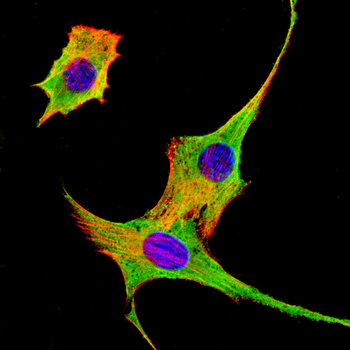
  • Aurora A/AURKA Rabbit Polyclonal Antibody [orb1290027]

    ELISA,  FC,  IHC,  WB

    Human

    Rabbit

    Polyclonal

    Unconjugated

    100 μg
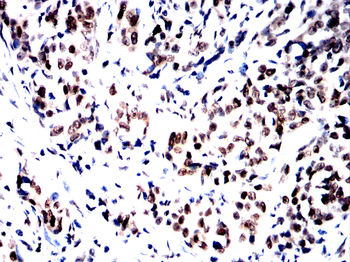
  • BRINP1 Rabbit Polyclonal Antibody [orb5958]

    FC,  IF,  IHC-Fr,  IHC-P

    Bovine, Equine, Gallus, Porcine, Rabbit

    Human, Mouse, Rat

    Rabbit

    Polyclonal

    Unconjugated

    100 μl, 200 μl, 50 μl
Quality Guarantee

Quality Guarantee

Explore bioreagents carefree to elevate your research. All our products are rigorously tested for performance. If a product does not perform as described on its datasheet, our scientific support team will provide expert troubleshooting, a prompt replacement, or a refund. For full details, please see our Terms & Conditions and Buying Guide. Contact us at [email protected].
Key Properties

No computed properties available.

Documents Download

Datasheet
Product Information
Download

Request a Document

Protocol Information

Retinoic acid (orb1309934)

  • Star
  • Star
  • Star
  • Star
  • Star
  • 0.0
Based on 0 reviews

Participating in our Biorbyt product reviews program enables you to support fellow scientists by sharing your firsthand experience with our products.

Login to Submit a Review

No reviews yet

Step 1: Enter information below

(Recommended: An additional animal making an allowance for loss during the experiment)

Step 2: Enter the in vivo formulation

(This is only the calculator, not formulation. Please contact us first if there is no in vivo formulation at the solubility Section.)

% DMSO +
%+
% Tween 80 +
%

Available Sizes

Select a size below

50 mg
¥ 910.00
1 ml x 10 mM (in DMSO)
¥ 1,170.00
100 mg
¥ 1,170.00
500 mg
¥ 1,430.00
1 g
¥ 1,690.00
5 g
¥ 3,120.00
DispatchUsually dispatched within 3-5 working days
Bulk Enquiry